Artificial Intelligence (AI) and Machine Learning (ML)
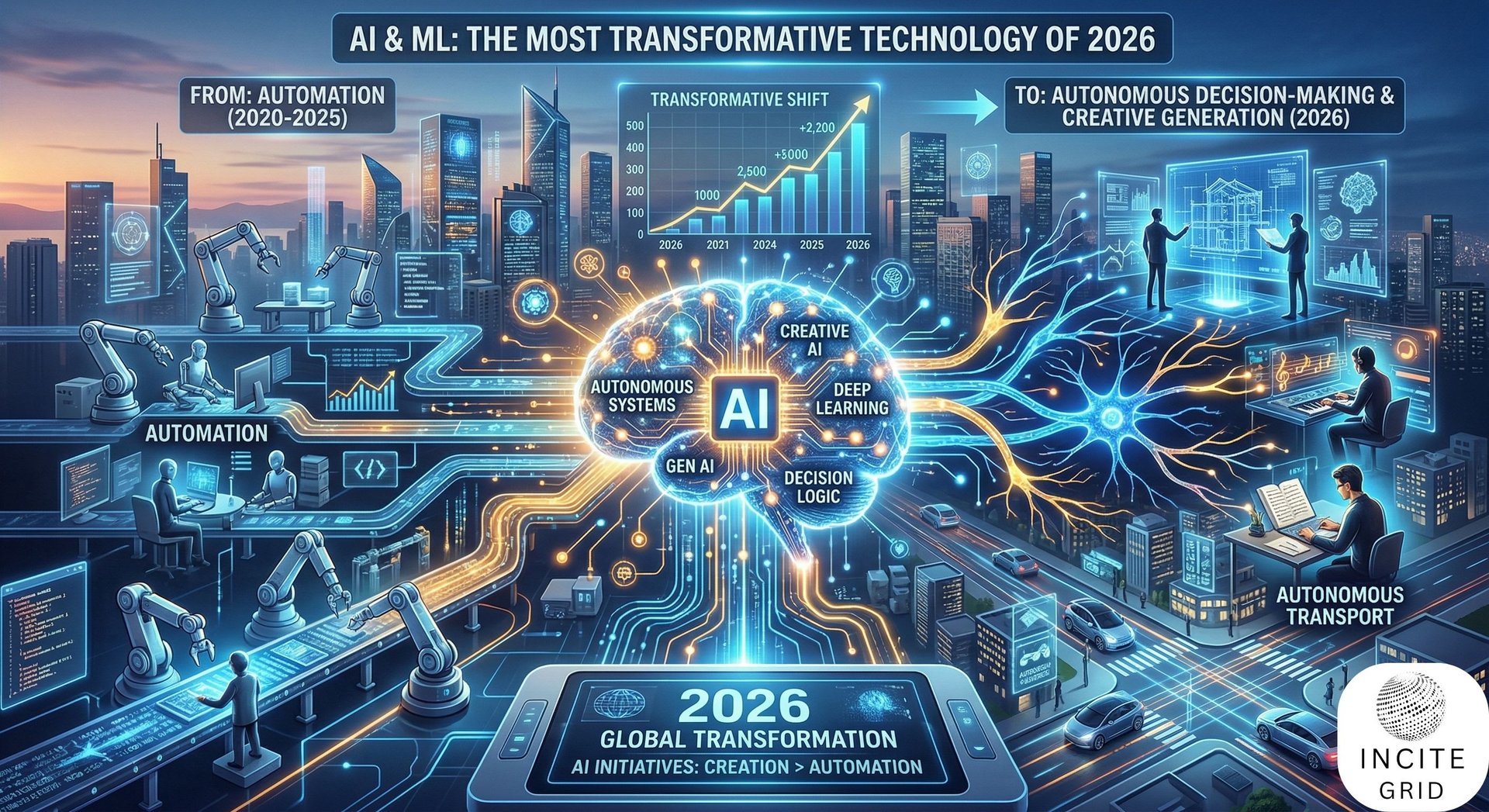
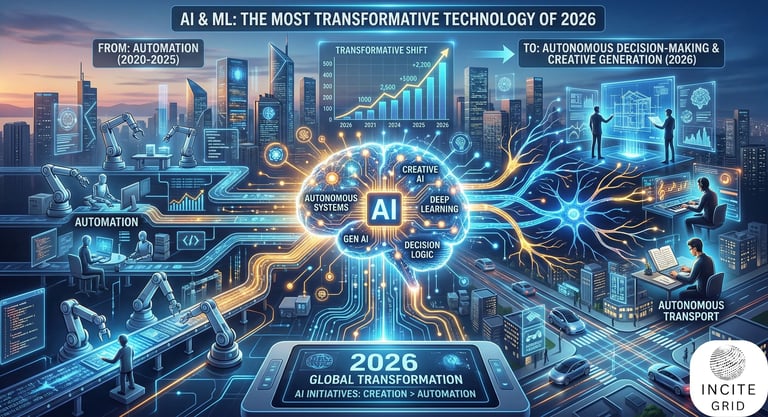
Artificial Intelligence (AI) and Machine Learning (ML) represent the most transformative technology of 2026, shifting from automation to autonomous decision-making and creative generation
Artificial Intelligence (AI) and Machine Learning (ML)
Artificial Intelligence (AI) and Machine Learning (ML) represent the most transformative technology of 2026, shifting from automation to autonomous decision-making and creative generation
AI and ML in 2026: The Most Transformative Technologies – From Automation to Agentic Autonomy and Creative Generation
In 2026, Artificial Intelligence (AI) and Machine Learning (ML) have become the most powerful forces reshaping our world. They have moved far beyond simple automation of repetitive tasks into agentic AI — intelligent systems that make autonomous decisions, plan multi-step actions, and execute complex workflows with minimal human input. Simultaneously, generative AI has evolved into creative infrastructure, enabling original content, designs, and scientific breakthroughs.
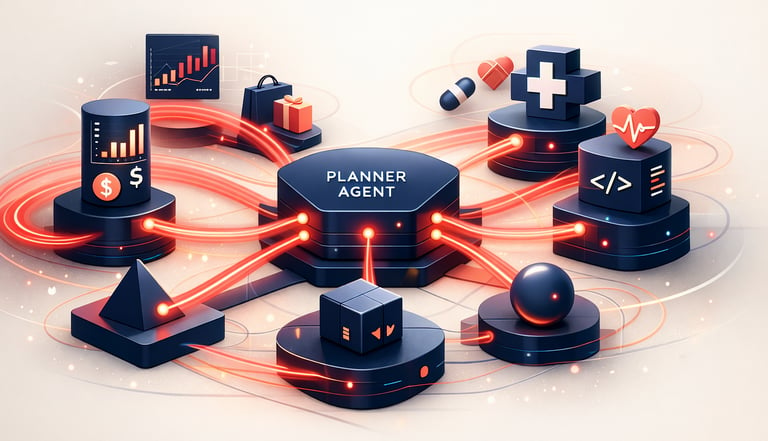
Agentic AI at work – A central “Planner Agent” coordinating multiple specialized AI agents across healthcare, finance, shopping, and coding. This visual perfectly shows how autonomous decision-making works in 2026.
The Shift to Agentic Autonomy
Traditional AI automated routine jobs like data entry or basic predictions. In 2026, agentic systems set goals, break them down, reason through uncertainties, use tools, adapt in real time, and complete entire processes independently.
In healthcare, AI agents analyze scans, recommend treatments, monitor patients continuously, and simulate drug interactions. In logistics and supply chains, multi-agent systems predict disruptions, reroute shipments, and optimize global operations autonomously.
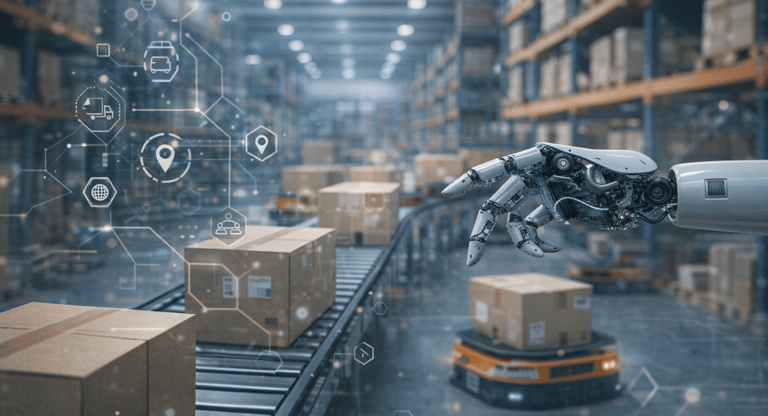
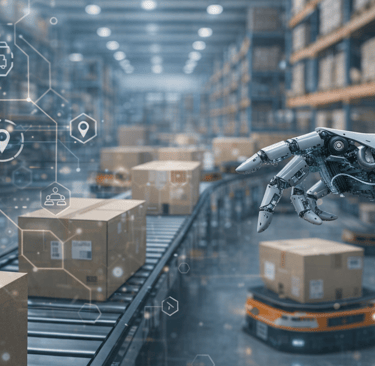
Autonomous operations in action – A robotic hand managing a smart warehouse with digital overlays showing real-time tracking and coordination. This illustrates how AI now handles complex physical and digital workflows.
Generative AI as a Creative Powerhouse
Generative models have become everyday creative partners. They produce photorealistic videos from text, compose adaptive music, generate product designs, architectural plans, and even assist in scientific discovery by simulating molecules or writing code.
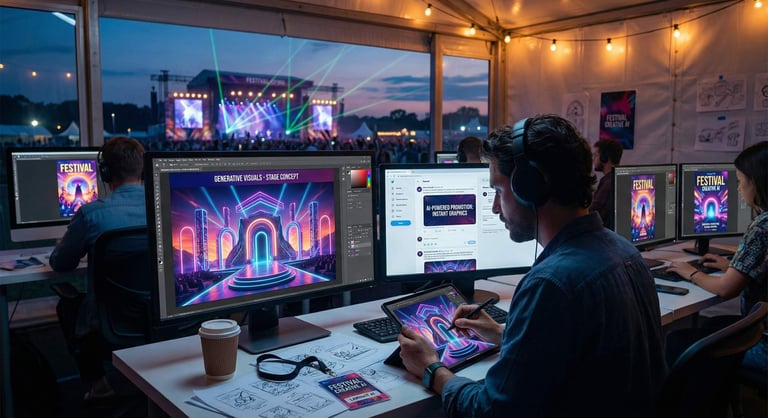
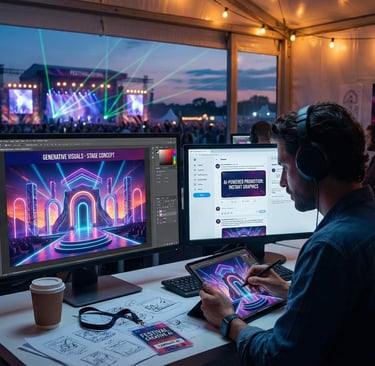
A designer using AI tools to create vibrant festival visuals and branding in real time. This image easily explains how humans and AI now co-create at high speed and quality.
Human-AI Collaboration and Future Impact
By 2026, the most successful organizations treat AI as a strategic teammate. Every employee may have dedicated AI agents handling routine work, while humans focus on vision, strategy, empathy, and ethical judgment. New roles like AI orchestration specialists and ethical auditors are emerging.
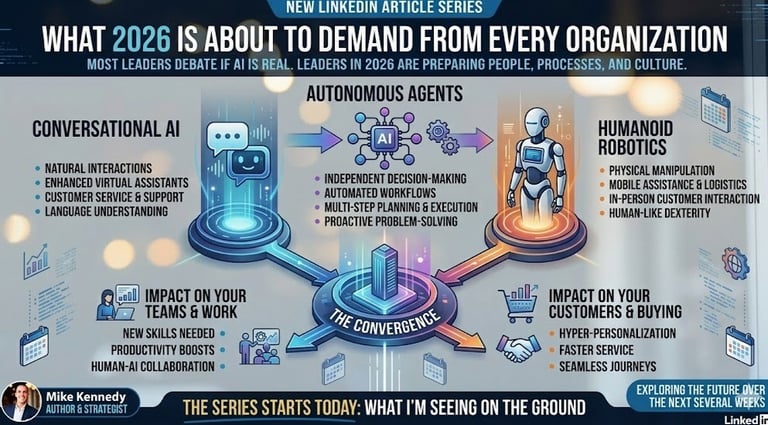
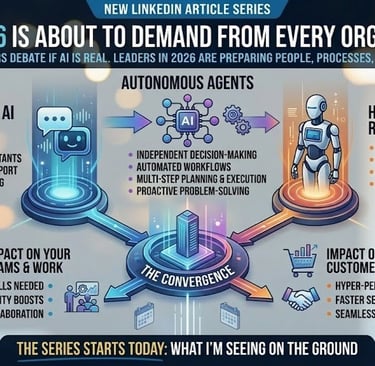
The future of work – Infographic showing the convergence of conversational AI, autonomous agents, and humanoid robotics into one powerful system. This helps readers quickly grasp how AI is transforming teams, processes, and customer experiences.
This transformation promises massive productivity gains and faster innovation cycles, but it also demands responsible governance, transparency, and sustainable practices to address challenges like accountability, bias, and energy consumption.
Conclusion AI and ML in 2026 represent more than advanced tools — they mark a new era of autonomous decision-making and creative generation. Organizations and individuals who learn to collaborate effectively with these intelligent systems will lead the future.