World Freedom Day
Commemorating the fall of the Berlin Wall on November 9th. It celebrates liberation, democracy, and the end of oppression worldwide.w
TEENS SECTION

World Freedom Day
Commemorating the fall of the Berlin Wall on November 9th. It celebrates liberation, democracy, and the end of oppression worldwide.
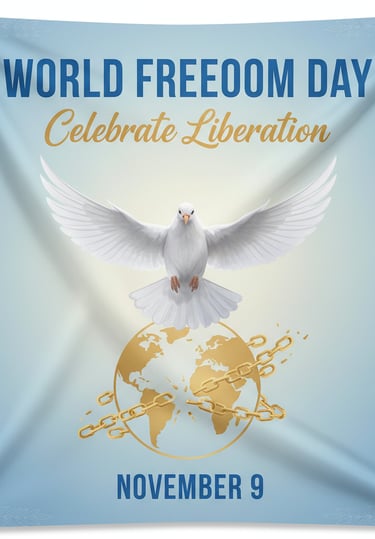
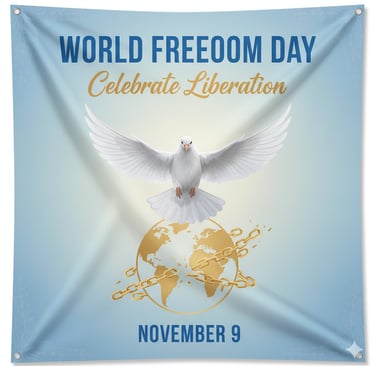


World Freedom Day: A Reminder That Liberty Is Never Free
November 9, 2025
Every year on November 9, the world pauses to mark World Freedom Day, commemorating the fall of the Berlin Wall in 1989. What began as a bureaucratic misstep in East Berlin became a tidal wave of human will. Within hours, citizens armed with hammers and hope chipped away at a concrete scar that had divided families, dreams, and a continent for 28 years. By morning, the Wall was breached—not by tanks, but by ordinary people who refused to live half-lives.
The images are etched in history: jubilant Trabant cars honking through Checkpoint Charlie, strangers embracing atop the graffiti-splattered barrier, David Hasselhoff singing “Looking for Freedom” to a sea of tear-streaked faces. Yet beneath the euphoria lay a deeper truth: freedom is fragile, hard-won, and easily lost.
The Wall Was More Than Concrete
For 103 miles, the Berlin Wall wasn’t just a physical barrier. It was a death strip of watchtowers, guard dogs, and 302 documented killings. It separated brothers from sisters, students from futures, artists from expression. East Germans risked drowning in the Spree River or being shot in “no-man’s-land” for the crime of wanting to choose their own groceries, music, or beliefs.
When the Wall fell, it didn’t just reunite Germany—it dismantled the Iron Curtain’s psychological grip. Within two years, the Soviet Union dissolved. Satellite states from Poland to Hungary rewrote their destinies. The ripple reached Tiananmen Square’s echoes, South Africa’s anti-apartheid struggle, and eventually the Arab Spring’s fleeting sparks.
Freedom in 2025: A Mixed Report Card
Thirty-six years later, the world is freer in aggregate—more democracies exist than in 1989—but the gains are uneven. According to Freedom House, global freedom has declined for 19 consecutive years. Authoritarian regimes weaponize technology: China’s social credit system, Russia’s internet “sovereignty” laws, and facial recognition networks in over 100 countries turn surveillance into governance.
Even in open societies, freedom faces subtler threats. Cancel culture chills speech. Economic precarity silences dissent. Misinformation erodes trust in institutions meant to protect liberty. The same smartphones that livestream protests also track every keystroke.
What We Can Do
World Freedom Day isn’t nostalgia—it’s a call to action:
1. Educate the next generation. Teach children why the Wall fell—not just that it did. Show them Good Bye Lenin! or the Stasi files declassified in 2020. Let them touch a chunk of the Wall in a museum and feel its weight.
2. Defend digital liberty. Support encrypted messaging, decentralized platforms, and laws that treat data privacy as a human rights. VPNs aren’t just for travelers—they’re modern samizdat.
3. Amplify silenced voices. From Hong Kong’s umbrella protesters to Iran’s women defying hijab laws, courage still flickers. Share their stories. Donate to press freedom NGOs. Write to political prisoners.
4. Practice freedom daily. Speak unpopular truths kindly. Vote in every election, local or national. Read banned books. Travel—if you can—to places where these acts remain crimes.
A Personal Reflection
I once met an East German woman named Sabine in a Berlin café. She was 19 when the Wall fell. “We didn’t storm it with guns,” she said, stirring her coffee. “We stormed it with picnics. We brought blankets, radios, and the unbearable lightness of wanting to dance on the other side.” Her eyes glistened. “Freedom isn’t the absence of walls. It’s the presence of choices.”
This World Freedom Day, let’s honor the hammer-wielders of 1989 by building no new walls—physical, digital, or ideological. Let’s choose curiosity over certainty, dialogue over dogma, courage over comfort.
Because as long as one person is unfree, the Wall still stands—in fragments, in code, in fear.